
Dental Crowns
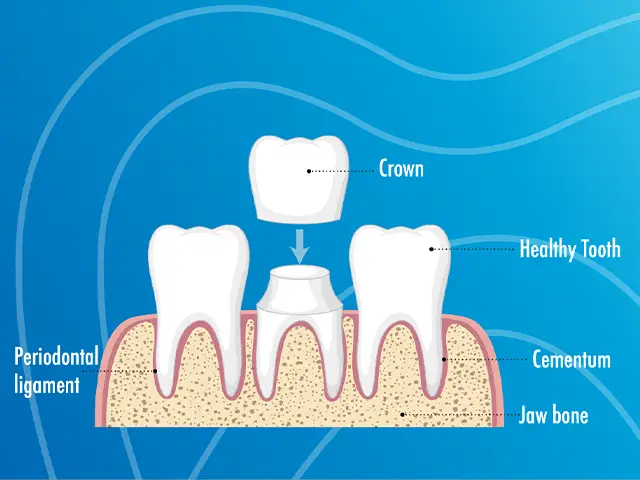
Dental crowns are custom-made, tooth-shaped caps designed to fully cover a damaged or weakened tooth. To ensure a proper and long-lasting fit, a small portion of the natural tooth’s enamel must be carefully shaped by the dentist before the crown is placed.
Crowns serve both restorative and cosmetic purposes. They are commonly used in cases such as broken or worn teeth, large fillings, decayed teeth, misshapen or crooked teeth, and smile design treatments. Dental crowns are especially effective for front teeth, thanks to their natural appearance and ability to mimic the shape, color, and translucency of real teeth.
Request Your Free,
No-Obligation Quote
Crowns can also be used in two other forms: as part of a dental bridge (to replace missing teeth) or as implant-supported crowns (to restore implants). Porcelain crowns are particularly popular due to their durability, aesthetic appeal, and biocompatibility.
In everyday language, dental crowns may also be referred to as “tooth caps” or “dental caps.” These terms all describe the same treatment.
Dental crowns are available in various materials, including zirconia, porcelain fused to metal (PFM), full ceramic, and E-max. The most suitable type depends on your specific dental needs, bite force, location of the tooth, and your aesthetic expectations. During your consultation, your dentist will guide you in choosing the ideal crown type for long-lasting and natural-looking results.
How Long Do Dental Crowns Last?
Dental crowns are made from durable materials and typically last between 15 to 20 years. However, their longevity largely depends on how well you care for them. Just like natural teeth, crowns require good oral hygiene, regular dental check-ups, and proper maintenance.
With consistent brushing, flossing, and professional cleaning, crowns can remain strong and functional for many years. Neglecting oral hygiene, on the other hand, can lead to problems such as decay around the crown, gum disease, or even crown failure. In short, the better care you take of your crowns, the longer they will serve you.

Types of Dental Crowns
At OGN Dental Studio, we offer a range of crown materials tailored to your needs in terms of durability, aesthetics, and budget. Each type has unique advantages:
- Zirconium Crowns : Zirconium crowns are known for their exceptional strength and natural appearance. They are metal-free, biocompatible, and ideal for both front and back teeth. Zirconium is also highly resistant to wear and discoloration.
- E-Max (Lithium Disilicate) Crowns : E-Max crowns offer superior aesthetics due to their high translucency, making them perfect for visible front teeth. They are slightly less durable than zirconium but provide excellent results for cosmetic purposes.
- Porcelain Fused to Metal (PFM) Crowns : PFM crowns combine the strength of a metal base with the aesthetics of porcelain. While they are strong and long-lasting, the metal underneath can sometimes create a grey line at the gum over time.
- Full Porcelain Crowns : Full porcelain crowns provide a very natural look and are metal-free, making them a good option for people with metal allergies. They are usually recommended for front teeth due to their aesthetic quality.
- Metal Crowns : Made from gold, platinum, or base metal alloys, these crowns are extremely durable but not tooth-colored. They are typically used for molars where appearance is less important.
Dental Crowns Process
At OGN Dental Studio, the dental crown process is designed to be comfortable, efficient, and highly personalized. Here’s how we transform damaged or unsightly teeth into strong, natural-looking smiles:
1. Initial Consultation and Examination
Your journey begins with a detailed dental examination and consultation. Using digital X-rays or 3D imaging, we evaluate the tooth structure, gum health, and overall oral condition to determine whether a crown is the right solution.
2. Tooth Preparation
The tooth that will receive the crown is gently reshaped. A small amount of enamel is removed to create space for the crown to fit perfectly. This step ensures the crown will align naturally with your bite and neighboring teeth.
3. Digital Impression
We take a precise digital impression of the prepared tooth and surrounding area. This scan is used to design a crown that fits perfectly and looks completely natural in shape, size, and color.
4. Temporary Crown Placement
While your custom crown is being crafted in the lab (usually within a few days), a temporary crown is placed on your tooth to protect it and allow you to eat and speak normally.

5. Final Crown Placement
Once your permanent crown is ready, we remove the temporary one and securely bond the custom crown to your tooth using high-quality dental cement. The crown is adjusted for a perfect fit and polished for a seamless, natural appearance.
6. Follow-Up and Care Advice
You’ll receive care instructions to help maintain your crown and overall oral health. With proper hygiene and regular dental visits, your crown can last for many years without issue.


How Much Do Dental Crowns Cost?
Dental crown prices vary depending on the material used, the number of crowns needed, and the clinic’s location. At OGN Dental Studio in Antalya, we provide high-quality crowns using world-renowned materials such as zirconium and E-max — at prices significantly lower than in many European countries.
At OGN Dental Studio, your treatment plan is personalized and transparent. We’ll inform you of the full cost in advance, with no hidden fees.
Average Cost Comparison: Dental Crowns
| Country | Average Price (Per Crown) |
|---|---|
| Turkey | £150 – £250 |
| United Kingdom | £600 – £1,000 |
| Germany | €700 – €1,200 |
| Netherlands | €750 – €1,300 |
| Switzerland | CHF 900 – CHF 1,400 |
Do Dental Crowns Fall Out Easily?
Properly designed and securely fitted dental crowns do not fall out easily. When placed with the right technique and materials, they remain stable and long-lasting. However, crowns that are poorly prepared, inadequately bonded, or misaligned may become loose or fall off over time.
That’s why choosing an experienced clinic and trusted dental professionals is essential. At OGN Dental Studio, we ensure each step — from preparation to bonding and aftercare — is handled with precision and care. Our treatment and post-treatment services are designed to provide long-term comfort and durability.

Advantages of Dental Crowns
Dental crowns offer both functional and aesthetic benefits, making them one of the most widely used solutions in modern dentistry. Here are some of the main advantages:
Restores Damaged Teeth
Crowns cover and protect teeth that are cracked, broken, worn down, or weakened by decay, helping restore their strength and function.
Improves Aesthetics
They can dramatically enhance the appearance of teeth by correcting shape, size, color, and alignment. Crowns are especially useful in smile makeovers.
Long-Lasting Results
With proper care, dental crowns can last 15–20 years or more. They are made from highly durable materials like zirconium, porcelain, and metal-ceramic combinations.
Protects After Root Canal
After a root canal treatment, a tooth may become fragile. Crowns provide essential protection and prevent future fractures.
Support for Dental Bridges and Implants
Crowns are used to anchor dental bridges and are also placed over dental implants, providing a functional and natural-looking tooth replacement.
Enhances Oral Function
Crowns restore chewing and biting ability in damaged teeth, improving comfort and speech clarity.
Custom-Fitted for Comfort
Each crown is individually designed to match your bite and fit precisely, making them feel and function like natural teeth.
Disadvantages of Dental Crowns
While dental crowns offer many advantages, it’s important to understand some potential drawbacks before starting treatment:
- Tooth Preparation is Required : To place a crown, the original tooth must be reshaped and a portion of enamel removed. This process is irreversible.
- Risk of Sensitivity : After a crown is placed, especially on a natural tooth, some patients may experience temporary sensitivity to hot or cold. This usually fades over time.
- Possible Damage to the Crown or Tooth : Although crowns are durable, they can still chip, crack, or loosen over time—especially with excessive grinding or biting hard objects.
- Cost : Depending on the material used and the number of crowns required, treatment can be relatively costly compared to simple fillings or other options.
- Risk of Allergic Reaction (Rare) : In very rare cases, patients may have an allergic reaction to the metal used in some types of crowns, such as metal-ceramic combinations.
- Marginal Decay Over Time : If oral hygiene is neglected, decay can form at the edges of the crown where it meets the natural tooth, potentially requiring replacement.
Can I Get Tooth Decay After Having Dental Crowns?
Yes, tooth decay is still possible after getting dental crowns—especially if proper oral hygiene is not maintained. Plaque, tartar, and bacteria can build up around the crown edges and eventually reach the natural tooth underneath, causing decay and bad breath.
Even though crowns are securely bonded, poor brushing and flossing habits can lead to issues over time. In some cases, decay may also result from genetic factors, bone conditions, or jaw structure.
At OGN Dental Studio, we use detailed 3D X-rays to carefully assess every case and take all necessary precautions to minimize these risks.

How Many Days Does Dental Crowns Treatment Take?
Dental crowns treatment is typically completed within 5 working days, requiring 3 to 4 clinic visits.
On the first visit, a detailed consultation is done, and your teeth are prepared. Impressions are taken, and temporary crowns are placed for your comfort.
Around 2 days later, you return for a trial fitting. If the crowns meet your and your dentist’s expectations, the final fitting is scheduled and completed shortly after.
Dental Crowns vs Veneers
- Coverage : Veneers cover only the front surface of the tooth, while Crowns cover the entire tooth (360 degrees). For this reason, Crowns require more enamel to be trimmed—up to 1.1 mm, compared to just 0.3–0.5 mm for Veneers.
- Durability : Crowns are significantly stronger and more durable than Veneers. This makes them ideal for patients with bruxism (teeth grinding) or clenching, as they provide full protection.
- Aesthetics : Veneers offer superior aesthetics due to their thin structure and higher light transmittance, giving a more natural, lifelike appearance—especially for front teeth.
When to Choose Which?
- Choose Crowns if you need strength, have damaged or root canal-treated teeth, or grind your teeth.
- Choose Veneers if your main concern is cosmetic and your teeth are healthy and structurally sound.
Frequently Asked Questions (FAQ)
A dental crown is a tooth-shaped cap placed over a damaged, broken, or cosmetically imperfect tooth to restore its shape, size, strength, and appearance.
No. The procedure is done under local anesthesia, so you won't feel pain during the treatment. Some mild sensitivity may occur afterwards but usually fades quickly.
With proper care and hygiene, dental crowns typically last between 15 to 20 years.
A well-placed crown should not fall off easily. However, poor bonding, bite misalignment, or trauma can cause it to loosen. If placed correctly, they stay secure for many years.
Yes. If oral hygiene is neglected, decay can form at the edge or underneath the crown, especially near the gum line.
It usually takes about 5 working days, with 3 to 4 clinic visits including consultation, tooth preparation, trials, and final fitting.
Dental crowns can be made from zirconia, porcelain, ceramic, metal alloys, or porcelain fused to metal—depending on the tooth's location and aesthetic needs.
Yes. After final placement, you can eat normally. However, avoid very hard or sticky foods to prevent damage to the crown.
Absolutely. Modern materials and techniques ensure that crowns match the color and shape of your natural teeth, offering a seamless and aesthetic result.
Crowns cover the entire tooth, while veneers only cover the front surface. Crowns are stronger and are usually recommended for more damaged teeth or for those who grind their teeth.